Sooner or later, everyone who falls for diving asks the same question: how do I make this official? The phrase you keep meeting is 'Open Water' — and around it swirl acronyms, star ratings and agency names that can make a simple goal feel complicated.
This page untangles it honestly. What an entry-level diving certification actually lets you do, how CMAS and PADI genuinely compare, and how you can take your first steps — from a no-commitment try-dive on one of our boats to a full CMAS certification course with Side Diving · Atalay Tour, arranged on request.
What 'Open Water' Actually Means
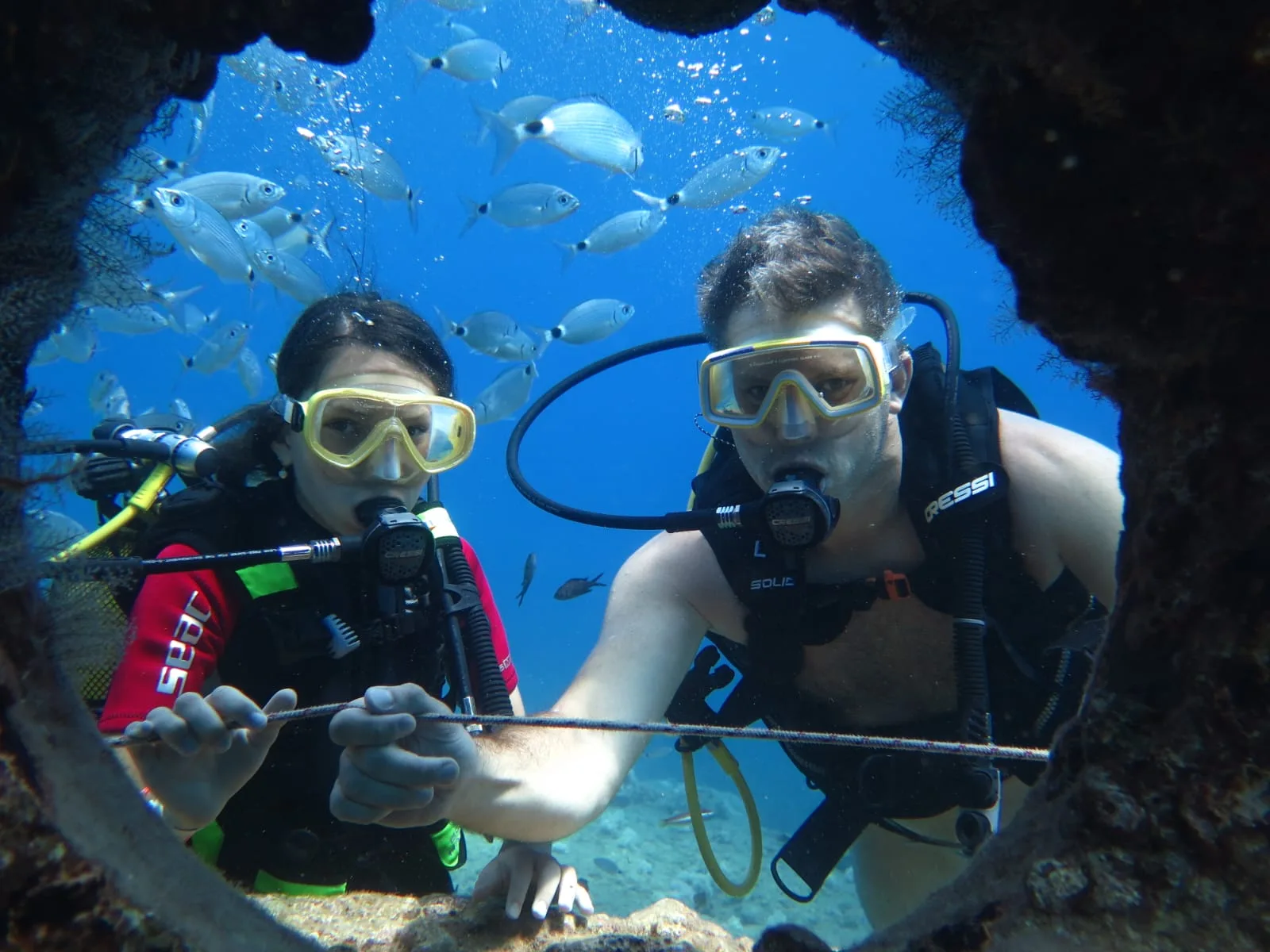
An entry-level scuba certification — 'Open Water Diver' in PADI's naming, 'One Star Diver' in the CMAS system — is the qualification that turns you from a guided guest into an independent diver. In practical terms, it certifies that you have learned to plan and make dives with a buddy, without an instructor holding your hand, within the depth limits of your training level.
Earning it involves three ingredients that every serious agency shares:
- Theory — how pressure affects your body, how to plan a dive, how to read your equipment and stay within safe limits.
- Confined-water practice — mastering core skills like mask clearing, regulator recovery and buoyancy control in easy, shallow conditions.
- Open-water dives — real dives in the sea, where you demonstrate those skills where they matter.
The certification card you receive is recognised at dive centres worldwide and does not expire. It is the passport of recreational diving: with it, you rent equipment, join dive boats as a certified diver and log dives that count toward higher levels.
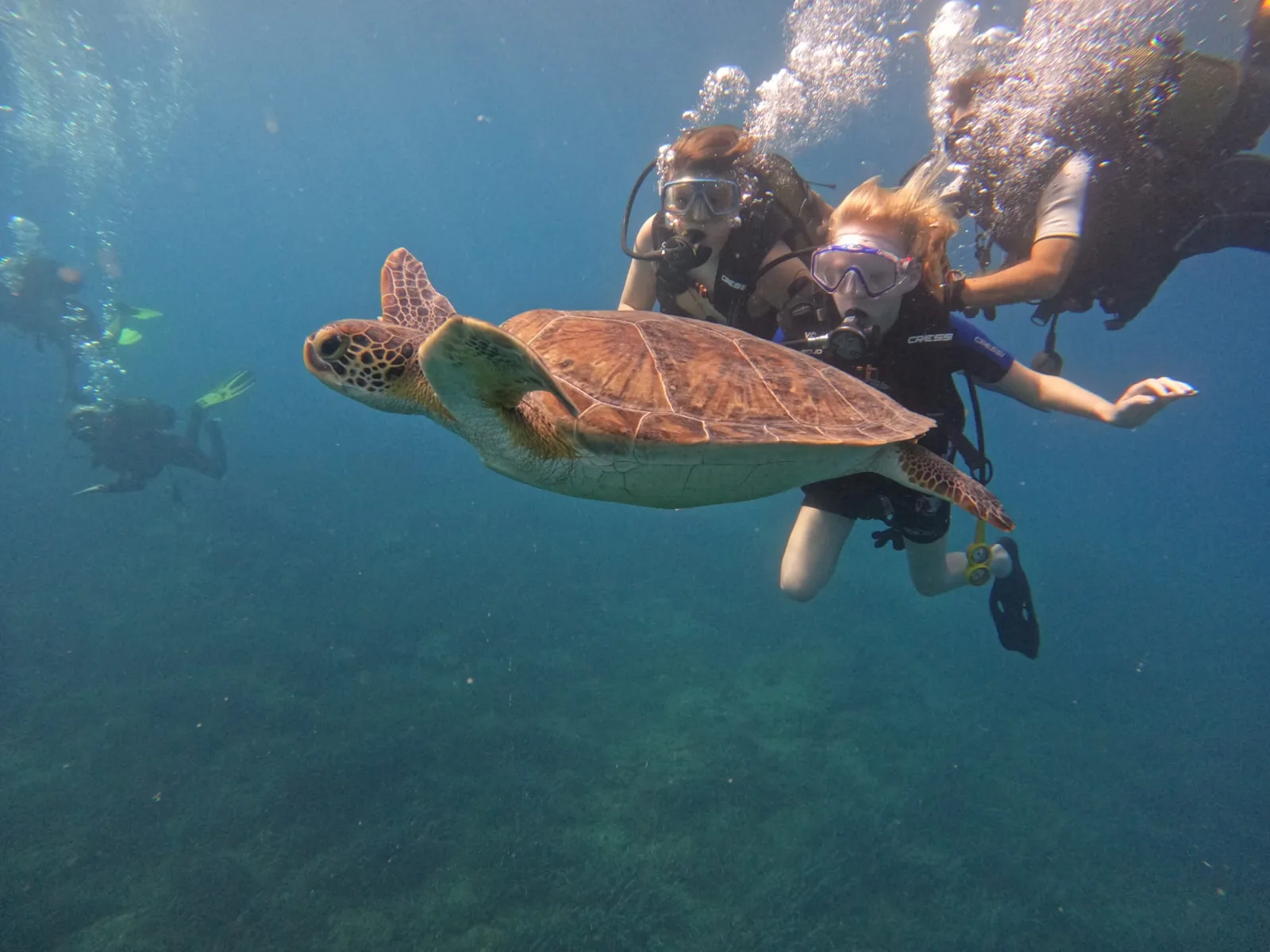
Worth knowing: you do not need any certification to dive with us on our daily trips. Every one of our five boat trips welcomes complete beginners with guided dives at 5–8 and about 13 metres. Certification is for those who want diving to become part of who they are, not just part of one holiday.
CMAS and PADI, Compared Without the Sales Pitch
The two names you will meet most often on this coast are CMAS and PADI, and the honest summary is: both are respected worldwide, and a competent diver from either system is simply a competent diver.
- CMAS (Confédération Mondiale des Activités Subaquatiques) is the world underwater federation, with deep roots in European diving. Its levels are expressed as stars — One Star Diver is the entry certification, with Two and Three Star levels above it. CMAS training has a reputation for thorough, federation-style education.
- PADI (Professional Association of Diving Instructors) is the world's largest recreational training agency, with the familiar Open Water Diver as its entry level. Its strength is standardised, modular teaching taught the same way everywhere.
Dive centres worldwide recognise both cards, and the core skills — buoyancy, buddy procedures, safe ascent — are the same water in either bottle. Our own team reflects this dual world: our Kemer trips are led by PADI-certified instructors, and the certification courses we offer ourselves are CMAS.
Our unsalesy advice: the agency on your card matters far less than the instructor in front of you and the number of dives behind you. Choose the path that fits your holiday and your budget, then go diving — often.
Starting Your CMAS Certification With Us
If you are ready to go beyond try-dives, Side Diving · Atalay Tour offers CMAS certification courses on request. We keep this deliberately personal rather than packaged: course arrangements depend on your timing, your starting level and your goals, so we plan each course individually with you.
A few honest ground rules, so there are no surprises:
- Courses are arranged on request — tell us when you are on the coast and what you want to achieve, and we will tell you what is possible.
- Course fees are separate — certification training is not included in our daily boat trip prices, and we do not publish course prices online. You will get a clear, personal quote before committing to anything.
- The setting is the same sea you will love — the waters we dive every day from our five bases, from the Side Underwater Museum's sculptures to Alanya's rocky reefs.
The first step costs nothing: send us a message or reach us on WhatsApp with your dates, and we will reply with a realistic plan. If you are already certified with any agency and simply want to dive, join any daily trip — we sign and stamp logbooks officially on board, and our page for certified divers covers what your day looks like.
Not Sure Yet? Start With One Breath
Here is the advice we give every guest who asks about certification while still standing on dry land: try diving first.
A certification course is a genuine commitment of holiday time and money — and the try-dive exists precisely so you never have to make that commitment blind. One of our full-day discover scuba diving trips gives you the complete experience: safety briefing, fitted equipment, a gentle guided dive at 5–8 metres in the morning, lunch on board, then a deeper dive at about 13 metres in the afternoon. No licence needed, everything included, from €43.
By the boat ride home you will know — not suspect, know — whether diving is your thing. Some guests surface, dry off and immediately ask us about CMAS courses. Others decide that one or two guided dives per holiday is exactly the right amount of underwater in their life, and that is a perfectly good answer too: our boats will always take you at whatever level you are.
Either way, nothing is wasted. The comfort, breathing habits and underwater confidence you build on a try-dive make everything that follows easier. Browse all five trips, pick the coastline nearest your hotel, and start with a single breath underwater. The paperwork can wait until you are sure.