"I can't really swim — can I still try diving?" This is, by some distance, the question we are asked most often, usually in a slightly embarrassed voice at the end of an email. So let us answer it properly, without marketing spin in either direction. The short version: you do not need to be a good swimmer to try scuba diving with an instructor, but you do need basic comfort in the water. Those are two different things, and the difference decides whether your first dive becomes a highlight or a struggle. Here is how to tell which side you are on — and what your options are either way.
The Honest Answer, Unpacked
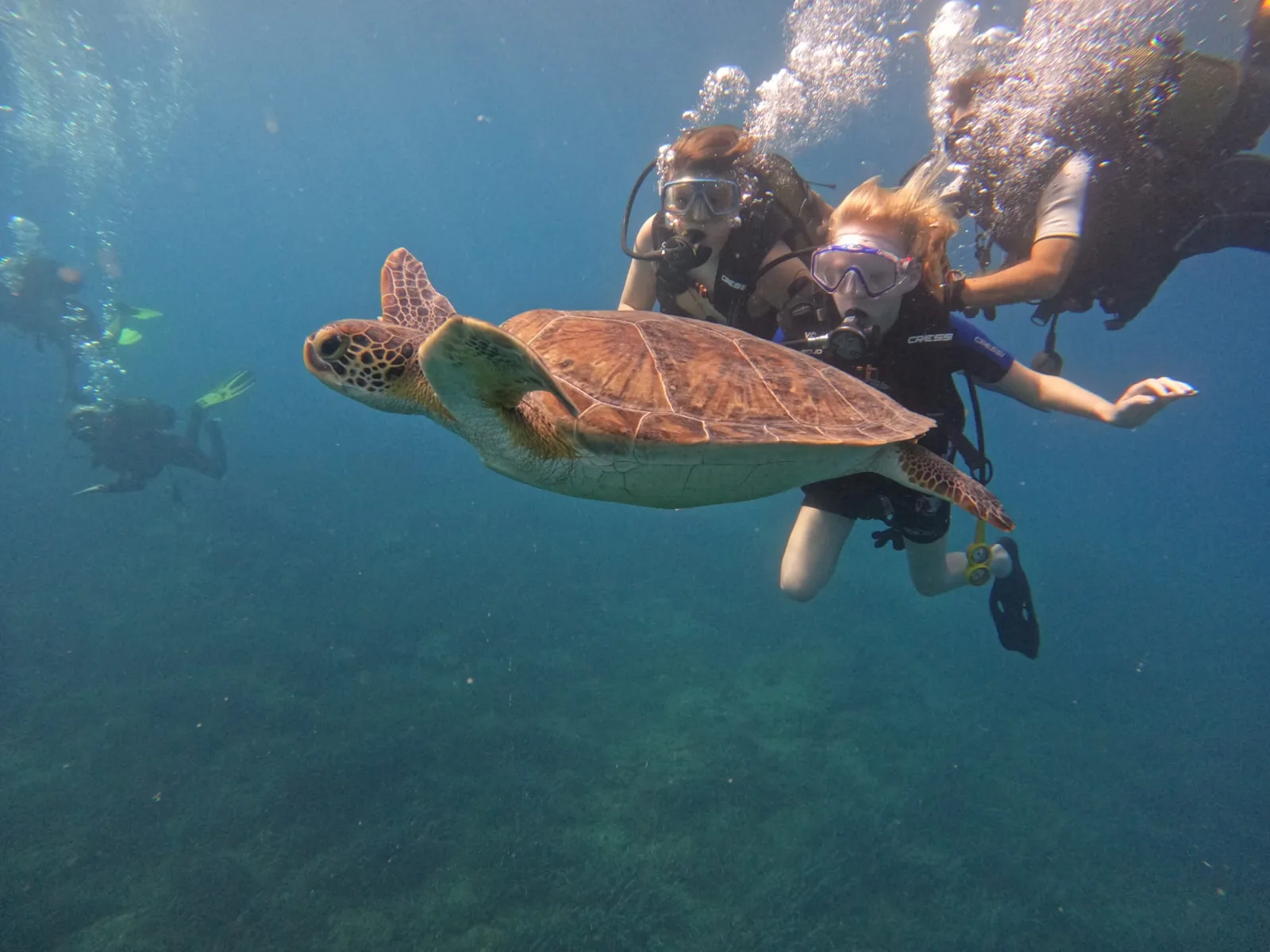
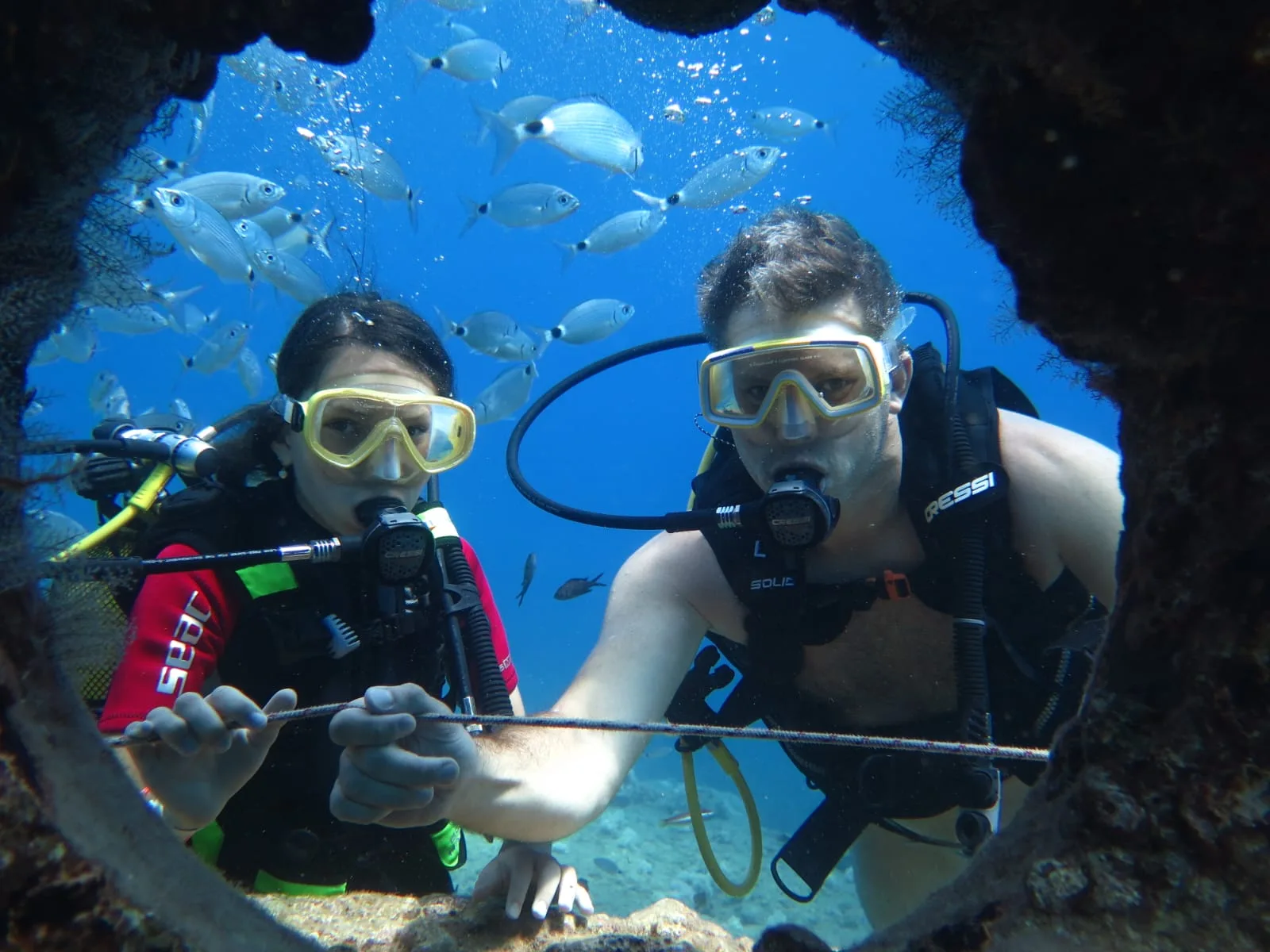
Scuba diving is not swimming. Nobody will ask you to do laps, tread water for minutes or demonstrate a technique. During a discover scuba dive, an instructor is physically beside you from the first minute to the last: the descent is slow and controlled, the first dive is a gentle 5–8 metres for about 15–25 minutes, and you are never left to manage anything alone. In that sense, weak swimmers are welcome and succeed every day.
What the experience cannot remove is the water itself. You will be in the sea, with your face underwater, breathing through a regulator. If putting your face in water triggers genuine panic — not nervousness, but panic — then the kindest advice is to build basic water comfort first, in a hotel pool, before you book a dive. Nervousness is normal and manageable; panic is the one thing an instructor cannot dive away for you.
Why Swimming Ability Matters Less Than You Think
- The equipment does the floating. Your buoyancy vest can hold you comfortably at the surface without you moving a muscle — inflated, it is essentially a personal life raft. Underwater, buoyancy is controlled by the instructor, not by your swimming technique.
- Fins change everything. Movement underwater is slow, gentle finning — closer to strolling than to swimming. There are no strokes to know.
- The instructor is your engine. On a first dive, your instructor manages depth, direction and pace. Your only jobs are to breathe slowly and equalize your ears — both taught in the safety briefing before you get wet.
- The boat is right there. You enter the water from the boat and surface next to it. This is not an open-water swim; it is a supervised visit just below the surface.
What "Basic Water Comfort" Actually Means
Be honest with yourself about these three points — they are the real entry test, and there is no shame in either answer:
- You can put your face in water without a feeling of dread.
- Being in water deeper than your height does not send you into panic, as long as something keeps you afloat.
- You are willing to breathe calmly through your mouth and follow simple instructions.
If all three feel fine, you are a candidate for a wonderful first dive, whatever your swimming style looks like. If one of them makes your stomach drop, read on — the boat day is still absolutely for you.
How Our Instructors Support Nervous Beginners
Every trip starts with a full safety briefing, and beginners practise the two or three basic skills in shallow water before anything else. Groups are kept small — on our flagship museum trip, three to four divers per instructor — so nobody is ever a face in a crowd. If you tell us you are anxious or a weak swimmer, tell us; the instructor will keep you literally within arm's reach, descend extra slowly, and surface with you at any moment if you ask. Our first-time diving guide walks through the whole day in detail so you can arrive with zero surprises.
Prefer to Skip the Tank? Join as a Visitor
Here is the option many people do not know exists: every one of our full-day boat trips welcomes non-divers as visitors at a reduced rate. You get the same boat day — the cruise, lunch on board, swimming stops and free hotel transfer — and you can snorkel at the surface while your friends or family dive below. For genuinely water-shy guests, it is the perfect answer: nobody stays behind at the hotel, and nobody is pushed into an experience they do not want. Compare the options on our prices page.
A Few Practical Notes
The usual health rules apply to divers and would-be divers alike: no diving during pregnancy or with severe asthma, heart or respiratory conditions, and no flying within 24 hours after a dive. Everything technical — equipment, briefing, insurance — is included, and booking follows our standard model: reserve free online, pay on the day, cancel free up to 24 hours ahead. A thermal inner suit (diving undergarment) or any extra neoprene layer is not included in the price and is available as an optional extra on request.
Come as You Are
Some of the widest post-dive grins we see belong to people who boarded the boat announcing they could barely swim. Water comfort, not swimming medals, is the ticket. If you have it, book the dive; if you are not sure, come as a visitor, watch from the surface with a snorkel, and decide with your own eyes. Either way, there is a place for you on the boat.