Almost everyone feels a flutter of nerves before their first scuba dive. That is completely normal — you are about to breathe underwater for the first time in your life, and your brain has spent years telling you that this is impossible. Here is the good news: with a patient instructor, a proper briefing and a calm, shallow first dive, that nervousness usually turns into pure wonder within the first few minutes. This guide walks you through exactly what happens on a first diving day with us in Side, Antalya, so nothing on the boat comes as a surprise.
You Do Not Need a Licence — or Any Experience
First things first: you do not need a diving certificate, previous experience or athletic fitness to try scuba diving. Our discover scuba diving format is built for complete beginners. An instructor is responsible for you from the safety briefing to the moment you climb back on the boat, and beginner groups are kept deliberately small so nobody is ever out of arm's reach. What you do need is basic comfort in the water, reasonable health and a little curiosity.
What Your First Diving Day Looks Like
All of our trips are full-day boat trips, and the rhythm of the day is the same whether you join us at the famous Side Underwater Museum or one of our other Mediterranean spots. A free transfer picks you up from your hotel and brings you to the harbour — and takes you back again in the evening. On board you will make two guided dives:
- Morning dive: a gentle introduction at 5–8 metres, lasting about 15–25 minutes. This is where you learn to trust the equipment, practise your breathing and get used to the underwater world.
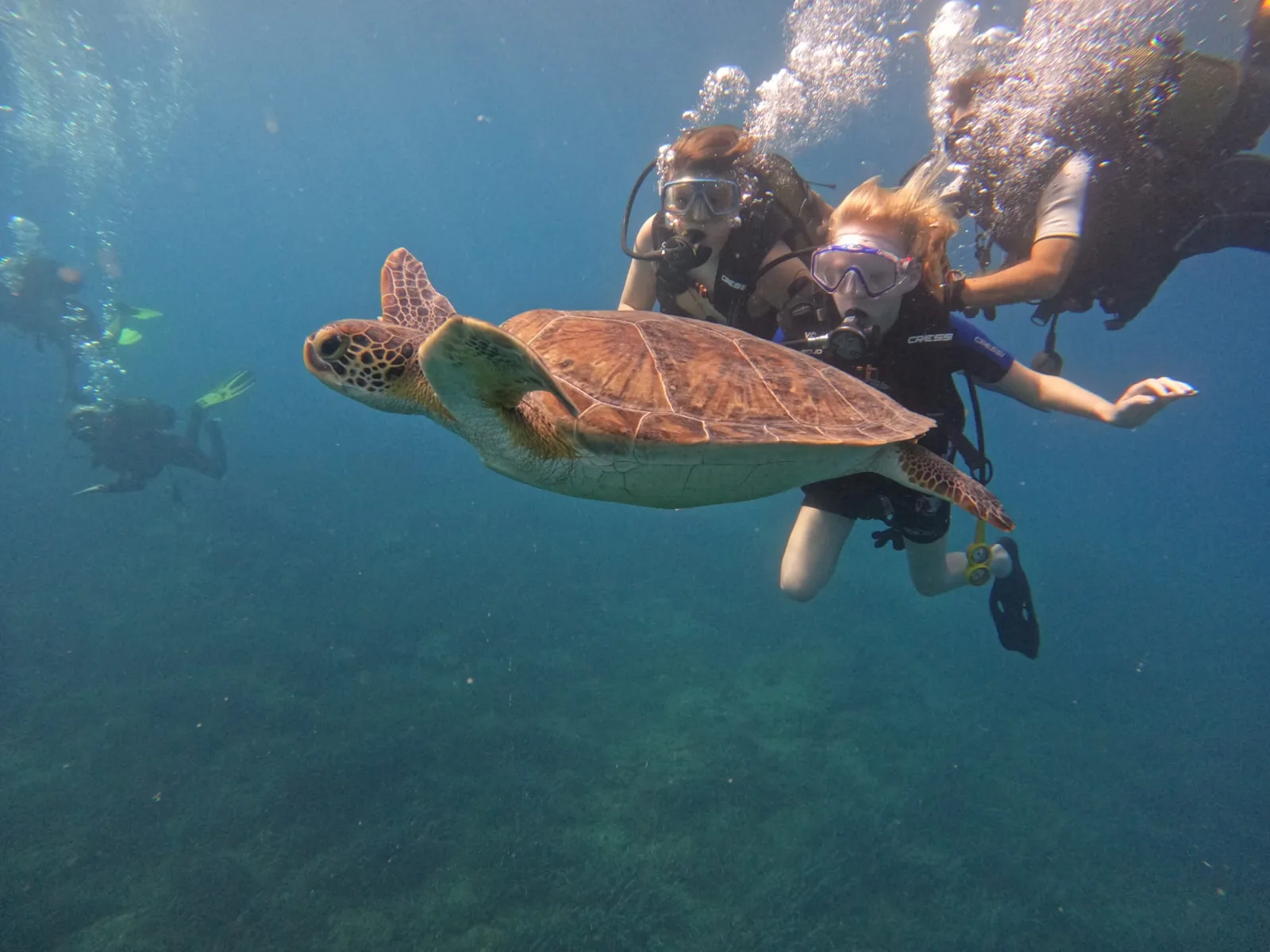
- Afternoon dive: once you have found your confidence, the second dive goes a little deeper, to about 13 metres — the deepest a beginner goes with us — where the light is still beautiful and there is plenty of marine life to watch.
Between dives, lunch is served on board and there is time to swim, sunbathe or simply enjoy being on a boat on the Turkish Riviera. All standard equipment, lunch, hotel transfer and passenger and diving insurance are included in the price — you only bring your swimsuit, towel, sunscreen and sunglasses.
The Safety Briefing: Your Foundation
Before anyone gets wet, your instructor gives a full safety briefing. Do not zone out here — this short session is what makes the whole day feel easy. You will learn the basic hand signals (OK, up, down, look, problem), how your mask, fins, wetsuit and regulator work, what to do if a little water enters your mask, and the one or two simple skills you will practise in shallow water. Good diving is built on calm preparation, which is why we treat the briefing as seriously as the dive itself. You can read more about our approach on our diving safety page.
Breathing Underwater: Slow and Steady Wins
The regulator in your mouth delivers air whenever you inhale — there is no trick to it. The only adjustment is psychological: breathing through your mouth feels strange for the first minute or two, and then it becomes automatic. Aim for slow, deep, relaxed breaths, the way you would breathe during a long sigh. Slow breathing keeps you calm, saves air and helps you float steadily in the water.
The golden rule: never hold your breath
Your instructor will repeat this in the briefing, and it is the single most important rule in scuba diving: keep breathing continuously and never hold your breath while underwater. As long as you breathe normally, your body handles the rest.
Equalizing Your Ears
As you descend, you will feel gentle pressure in your ears — exactly like on an aeroplane. The fix is simple and you will practise it before the dive: pinch your nose through the mask pocket and blow gently against your closed nostrils, or swallow. This is called equalizing. The key habits are to equalize early, equalize often, and never push through pain. If your ears will not clear, you simply rise half a metre, relax, and try again. Your instructor descends with you slowly for exactly this reason — the first metres are never rushed.
Common Worries, Honest Answers
- "What if water gets in my mask?" A small amount is normal and harmless. Clearing it is one of the easy skills you practise in the shallows.
- "I'm not a strong swimmer." You do not need to be — the equipment keeps you buoyant and your instructor stays close. We have written an honest guide on this: can non-swimmers try scuba diving?
- "What if I panic?" Panic underwater is rare precisely because the first dive is shallow, short and supervised. If you feel uneasy, you signal your instructor and surface together, calmly. Nobody is ever forced to continue.
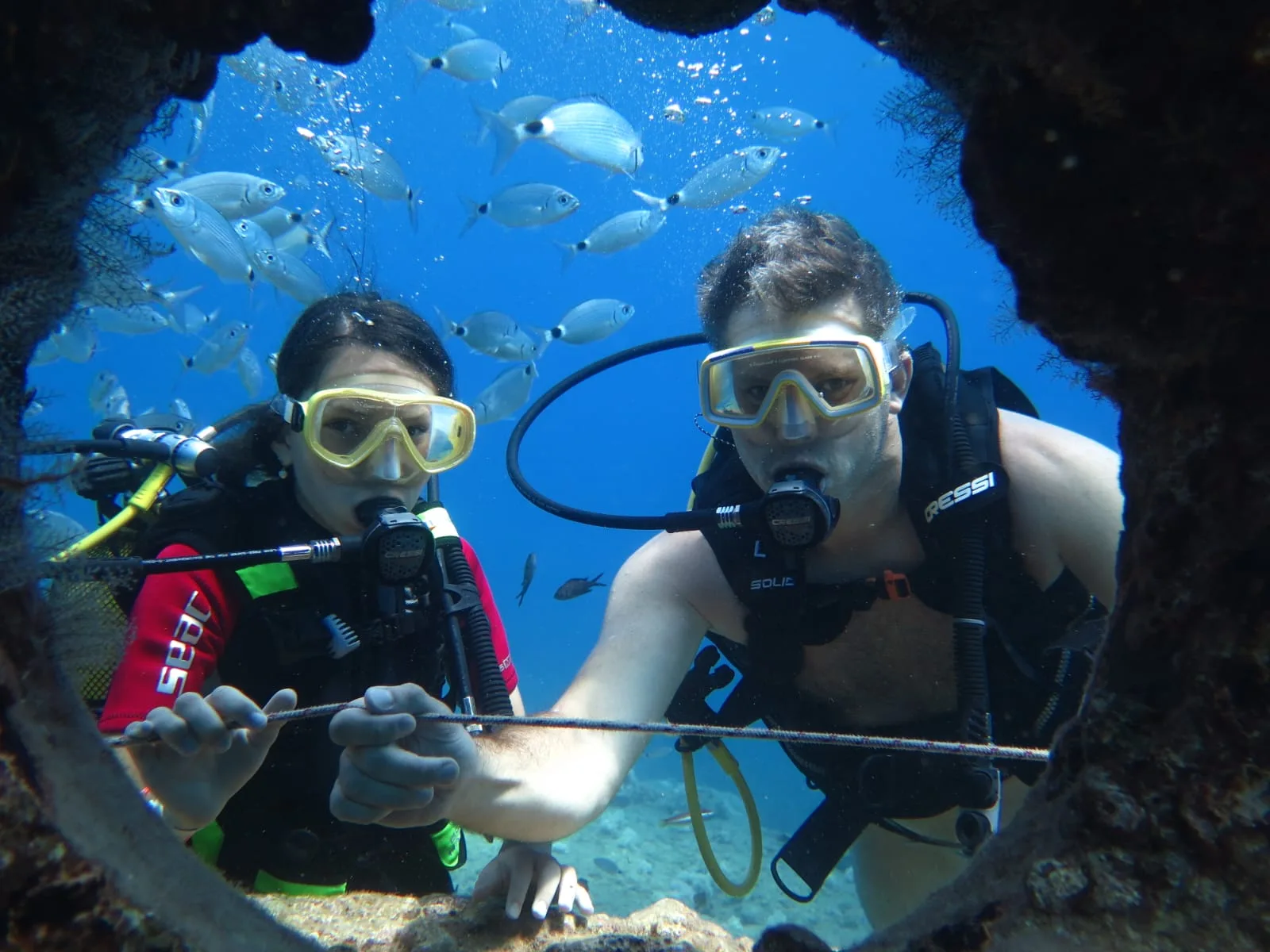
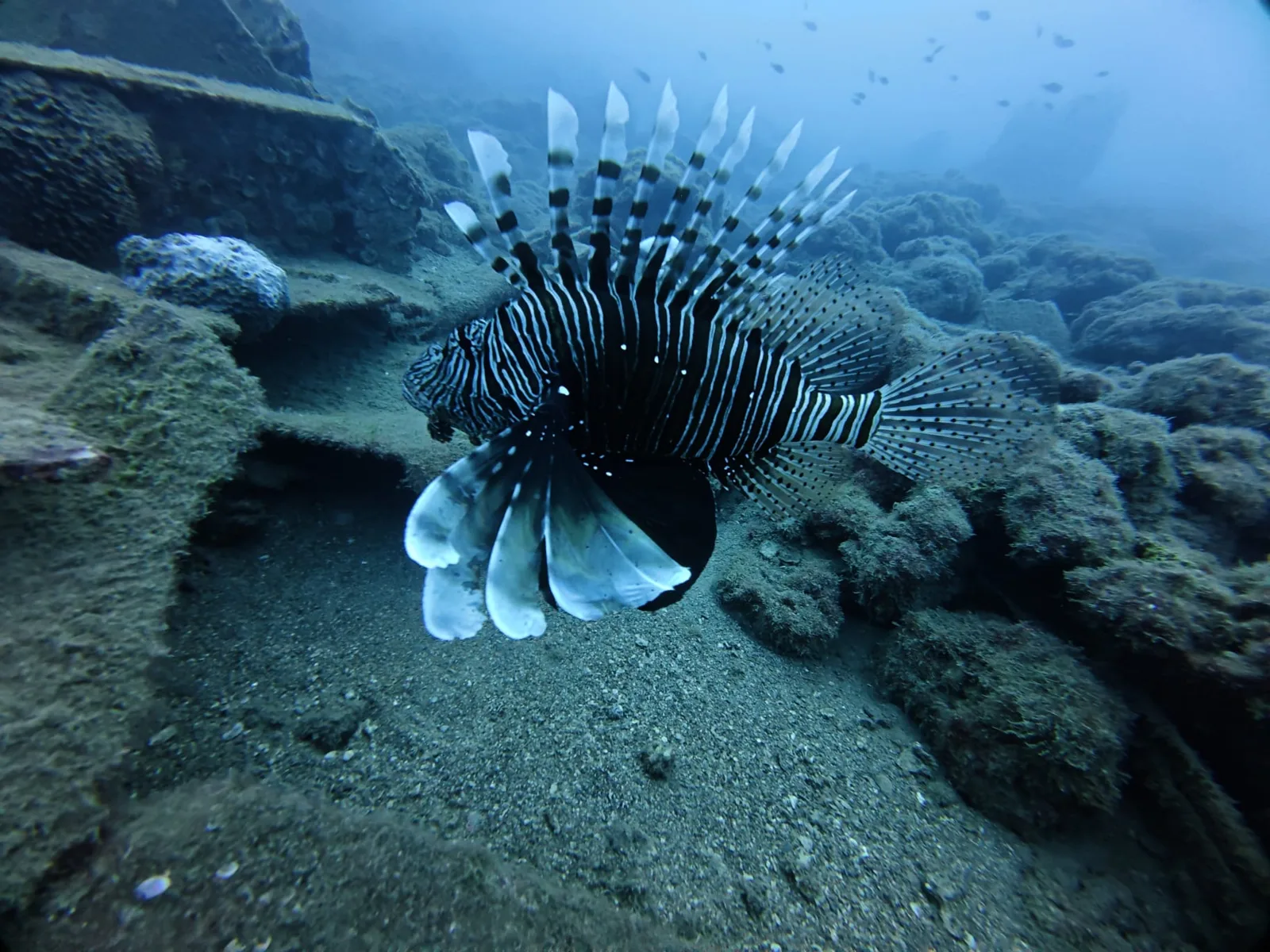
- "Will I see anything?" Yes — the Mediterranean around Side is home to shoals of curious fish, and on our museum trip you can even hand-feed them.
Health and Practical Notes
A few honest rules protect you. Diving is not possible during pregnancy, or with severe asthma, heart or respiratory conditions — if you are unsure, ask us before booking. And plan your calendar: you should not fly within 24 hours after diving, so do not book a dive for the day before your flight home. Everything else is easy: we provide all standard diving equipment, and our packing guide covers the few things you should bring from the hotel.
Ready for Your First Breath Underwater?
Your first dive is one of those experiences you will replay for years — the moment the noise of the world switches off and you hang weightless over the blue. Reserve your spot online for free, pay on the day of the trip, and cancel free of charge up to 24 hours in advance if your plans change. Browse our boat trips, pick your day, and let our instructors handle the rest.