Ask three divers about certifications and you will get three acronyms, two opinions and at least one heated debate. For a beginner it can look like alphabet soup: PADI, CMAS, SSI, Open Water, one star, two stars. The good news is that the system is far simpler than it looks — and that you need none of it to make your first dive on holiday. Here is the honest map.
Level Zero: The Try-Dive (No Certification Needed)
Every diving story starts the same way: a first breath underwater under the direct care of an instructor. This is the try-dive — known in the PADI world as Discover Scuba Diving and in CMAS clubs as an introductory or baptism dive. It is not a course and produces no card; it is a supervised experience.
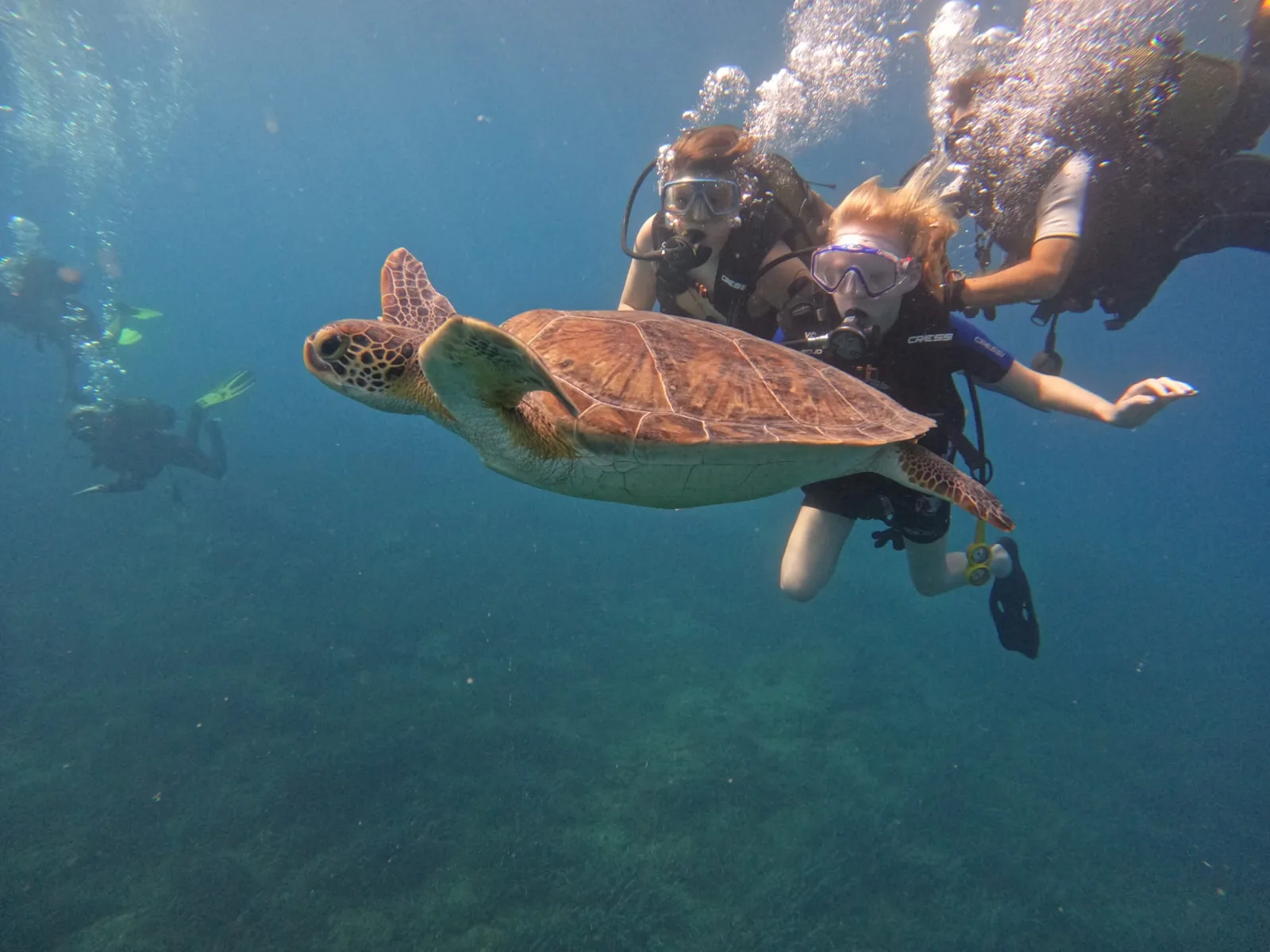
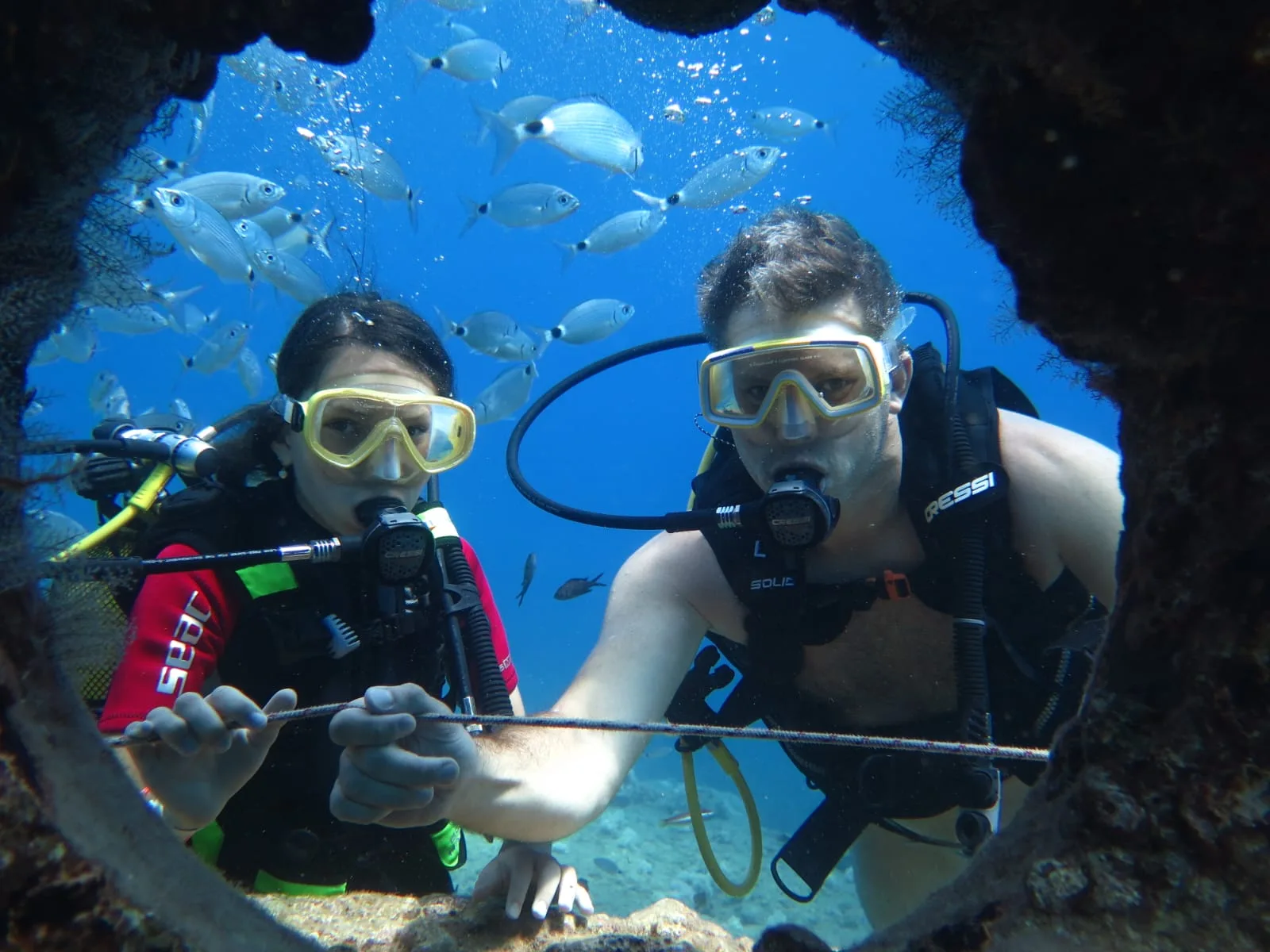
On our boat trips this is exactly what beginners do every day: a full safety briefing on board, all standard equipment provided, then a guided morning dive at five to eight metres for fifteen to twenty-five minutes, with an instructor responsible for only three to four divers. Confident guests make a second dive to about thirteen metres in the afternoon, which is the beginner ceiling. No licence, no paperwork beyond the standard health declaration — diving is not possible during pregnancy or with severe asthma, heart or respiratory conditions. Read the full walk-through on our discover scuba diving page. A thermal inner suit (diving undergarment) or any extra neoprene layer is not included in the price and is available as an optional extra on request.
The Two Big Families: PADI and CMAS
Dozens of training agencies exist, but two names dominate the conversation:
- PADI (Professional Association of Diving Instructors) is the world's largest commercial training organisation. Its ladder is built from standalone courses: Open Water Diver (the entry certification, qualifying you to dive to 18 metres with a buddy), then Advanced Open Water (deeper dives and speciality experience), then Rescue Diver, and on to professional ratings like Divemaster.
- CMAS (Confédération Mondiale des Activités Subaquatiques) is the world underwater federation, historically rooted in European diving clubs. Its ladder uses stars: one star (roughly equivalent to an entry-level certification), two stars (an experienced diver level), and three stars (dive leader level), with instructor grades above that.
Here is the part beginners worry about needlessly: the systems recognise each other in practice. A CMAS one-star diver and a PADI Open Water diver will both be welcomed on recreational dive boats worldwide. Agencies differ in teaching style and course structure, not in the physics of diving. Choose the agency your local school or holiday destination offers, and don't lose sleep over the logo.
What the Entry-Level Course Actually Teaches
Whatever the agency, a first certification course covers the same core: how pressure affects your body and your air, how to plan depth and time, how to clear a mask, recover a regulator, share air with a buddy and ascend safely. Theory, confined-water practice and open-water training dives — typically completed over three to four days. After that you are qualified to dive independently with a buddy within your training limits, anywhere in the world. Our open water diving page explains what that level of freedom feels like, and the advanced diving page shows where the ladder goes next.
The Logbook: Your Diving Passport
Certification cards prove what you have learned; the logbook proves what you have done. Every logged dive records date, site, depth, time and conditions, signed and stamped by the dive centre. Why it matters:
- Dive centres abroad use it to judge your real experience level, not just your card.
- Higher courses require minimum numbers of logged dives.
- It becomes, honestly, one of the best travel diaries you will ever keep.
Certified divers on our boats always get their logbooks signed and stamped after the day's two dives — just hand it to your instructor on board. Forgot your logbook at home? Ask us anyway; the dives still count and we will document them for you.
Starting Your CMAS Journey with Us
We run CMAS certification courses on request from our dive boat — from first star upwards. Because course schedules depend on your holiday length, your starting level and the season, we quote them individually rather than publishing a fixed price: simply contact us or mention it when booking a trip, and we will build a plan around your stay. Many guests follow the same natural path: a try-dive on the Underwater Museum trip first, then the decision to go for the certification once the sea has made its argument.
So Where Should You Start?
- Never dived before? Book a try-dive day. No licence, no commitment, everything included — see current prices for all five routes.
- Tried it and loved it? Ask us about a CMAS one-star course during your stay.
- Already certified? Bring your card and logbook, join any of our boat trips, and dive the real profiles — roughly 30 metres on standard certified dives, and down to 60 metres on the deep sites if your qualification allows, depending on conditions and the day's plan — with your logbook stamped at the end.
Whichever rung of the ladder you are on, the booking is the same: reserve free online, pay on the day, cancel free up to 24 hours before. The certifications can come later — the sea gives the first lesson free.